
Teaching Research & Writing
As a writer and instruction librarian, I bring the full arc of the research-to-writing process into the classroom. I design discussion-based, multimodal lessons that invite students to engage with academic work creatively and critically, approaching complex ideas through unexpected formats.
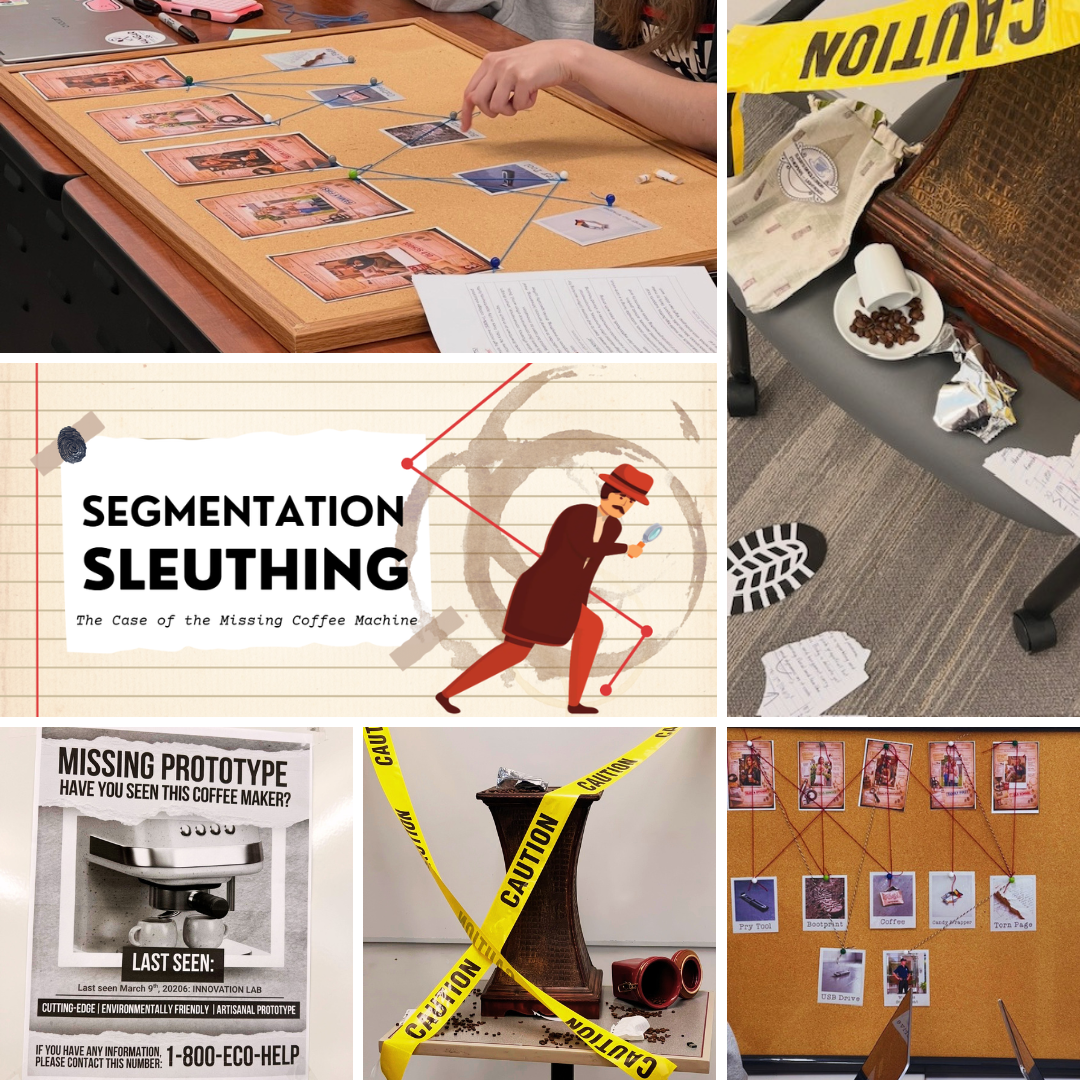
Segment Sleuths: The Case of the Missing Coffee Machine
Students analyze how context and audience shape meaning.
In this collaborative mystery activity, students work with staged evidence to determine who stole a prototype coffee maker. They sort relevant from irrelevant details, defend their interpretations to peers, and continually revise their explanation as new clues appear. Through this exercise, students develop a greater understanding of context, authority, and audience.
Designed for an Introduction to Marketing course, this activity lays the groundwork for understanding segmentation, targeting, and positioning before working with the Claritas PRIZM database and its psychographic segment profiles.
This activity demonstrates how close reading and interpretation skills taught in humanities courses can transfer directly to professional contexts, such as marketing.
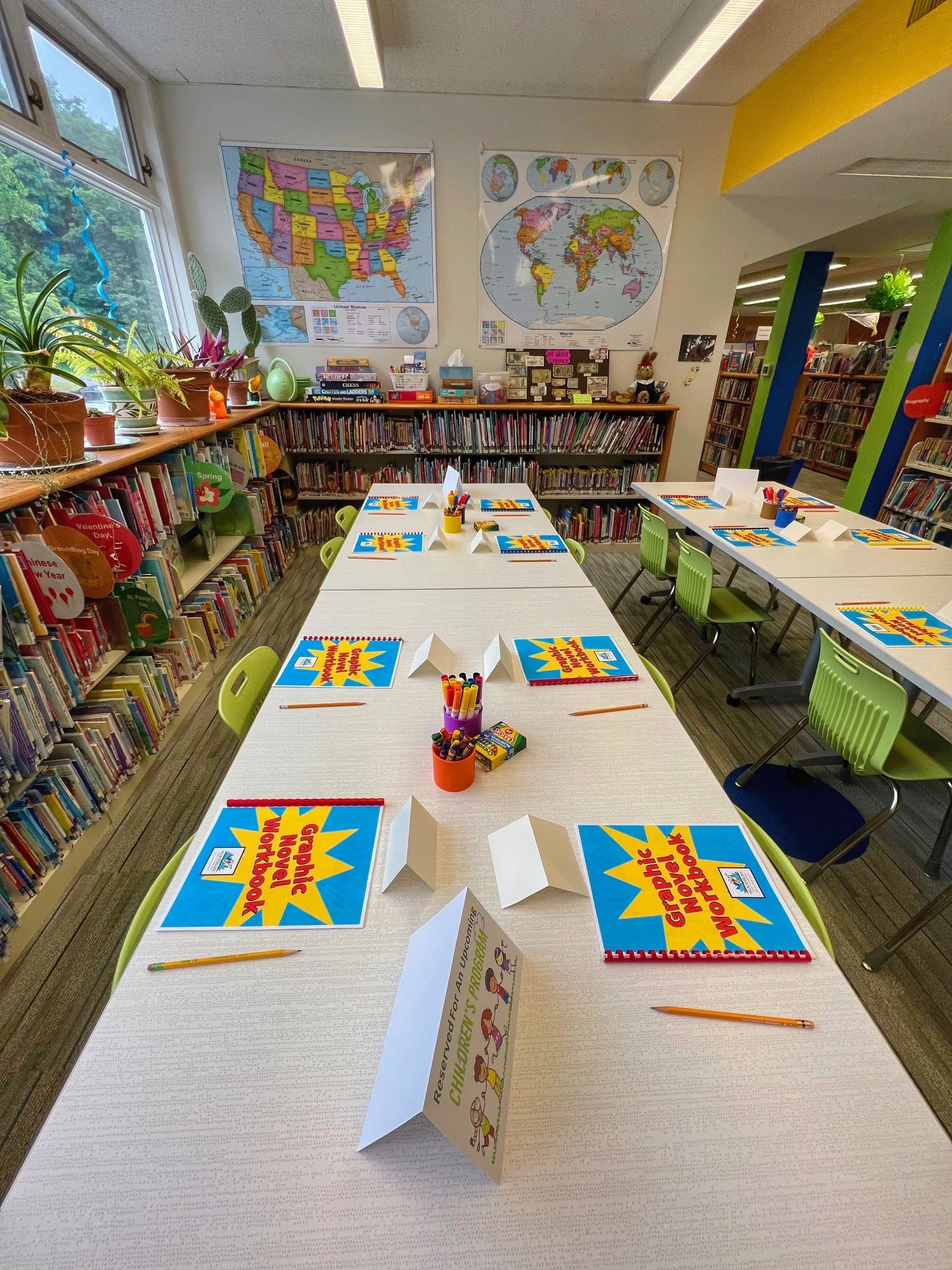
Graphic Novel Workshop: Storytelling Basics
Students develop compelling narratives using rhetorical building blocks.
I led a multi-session graphic novel workshop for students in grades 1–12 at the Woodbury Public Library. Using a workbook I designed, participants explored the basic building blocks of storytelling (character, setting, and plot) through short, scaffolded drawing and writing prompts. We discussed how character and setting inform plot, giving our character a problem, and elements that create a satisfying conclusion.
Working in age-based groups, students drafted visual narratives and revised their ideas as they moved from initial concept to a short comic. The series emphasized storytelling as a process, encouraging students to see how choices in image and text shape meaning for a reader.
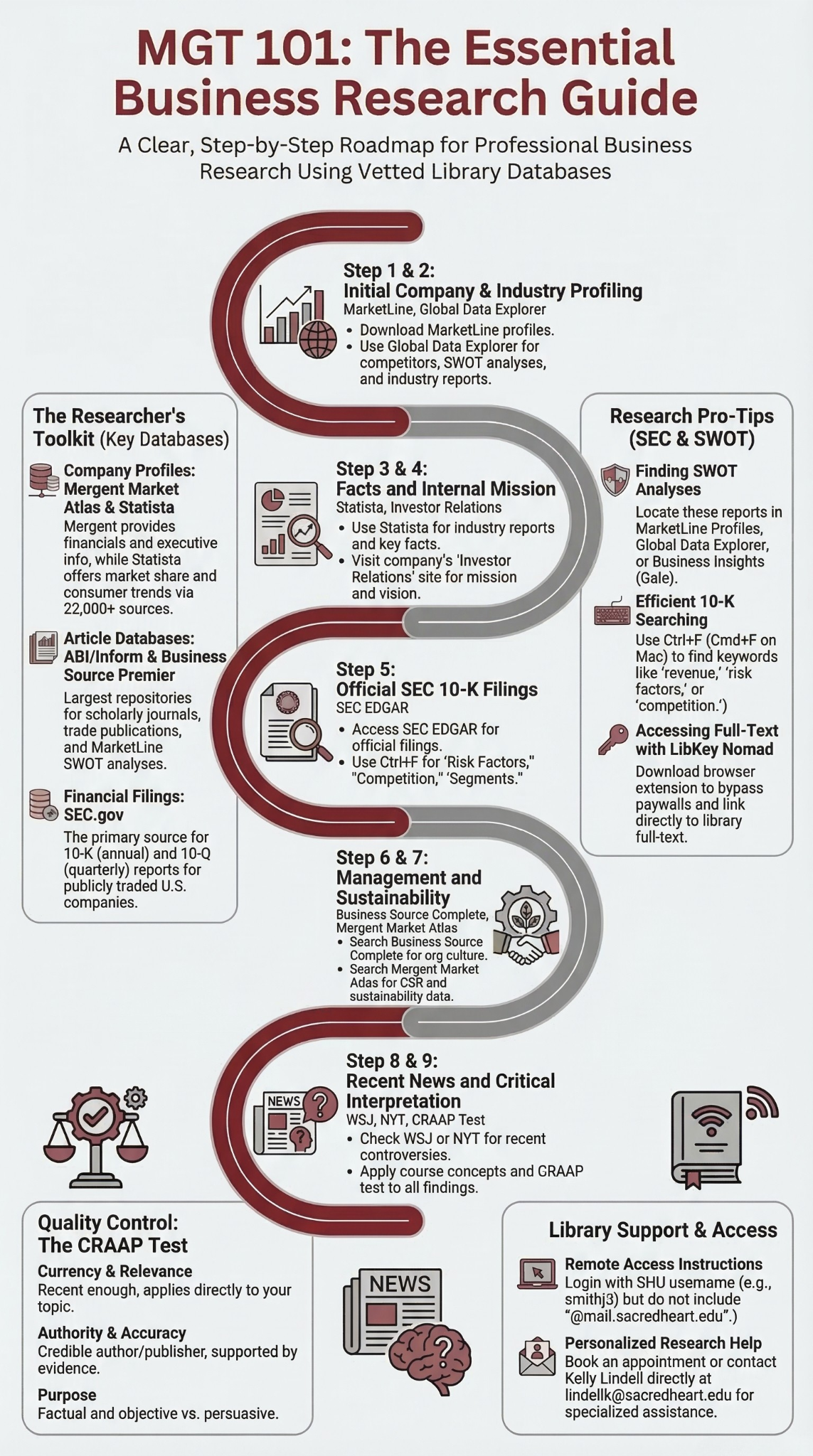
Research Roadmap
Students learn to map out research from question to sources.
I designed this visual roadmap to help overwhelmed students break a complex research task into clear, manageable stages, from initial background reading through critical interpretation of current news. Using this guide in class, we walk step‑by‑step through choosing appropriate tools, narrowing their focus, and documenting where different kinds of evidence fit in the larger project. This format helps students visualize research as an ordered process rather than a single search box.
Throughout, the roadmap emphasizes judgment: students must distinguish between foundational reference material, official documents, data sources, and recent commentary, and then apply evaluation criteria (such as the CRAAP test) to determine what is reliable and rhetorically useful for their purpose.
Originally created for an introductory management course, I now adapt this structure for other assignments and disciplines, including writing‑focused projects that require students to plan a research strategy, justify their source choices, and connect evidence to argumentative goals.
Research Quest: Database Scavenger Hunt
Students select and explore research tools, evaluate outcomes.
Using a flipped format, students first complete a brief online module of ten three‑minute videos that introduce the required databases and basic search techniques. In class, they work in project groups on Research Quest, a board‑style game where each stop presents a riddle that hints at which database and search approach will produce an appropriate source.
At each stop, groups submit a source and short annotation through a shared form; I review these in real time, approve appropriate sources, and move their game piece to the next stage. Throughout the process, I coach teams through problems with database selection, search terms, or source fit. By the end of the lesson, each group has constructed a complete, vetted annotated bibliography connected to their project, with research decisions made visible and justified at each step.
PESTEL Research & Annotated Bibliography Workshop
Students explain how individual sources contribute to a larger argument.
Students use this lesson to practice finding, evaluating, and interpreting sources, then articulating how evidence supports arguments. Working to create a shared document, students distinguish strong materials from weaker, more biased ones, and explain the significance of what they’ve found in annotations.
My in‑line comments on the final bibliography guide them in refining those explanations, pushing them to connect concrete details to larger insights and to treat research as an iterative process. Designed for an Introduction to Marketing course, the activity asks students to gather and annotate sources for a PESTEL (Political, Economic, Social, Technological, Environmental, Legal) analysis, translating research into strategic recommendations.
Mock Trial: Source Types & Their Purpose
Students identify primary vs. secondary sources, match source types to rhetorical purposes, and practice integrating evidence into argument.
In this Business Law lesson, students work in groups to evaluate an assigned legal source, such as a court opinion, statute, law review article, or news story, and classify it as a primary or secondary source. They identify the source type, consider its purpose and audience, and apply the CRAAP test to judge credibility, currency, and authority.
Each group then decides whether and how their source should be used in an academic assignment, framing a brief argument that explains the source’s role (background, support, counterargument, or example) and defends its inclusion or exclusion. The activity helps students see legal research as a rhetorical process: selecting appropriate sources for different writing tasks and incorporating evidence in ways that strengthen their claims.
Information overload is a common experience for undergraduate students (and most researchers) today. This assignment not only helps students distinguish credible from non‑credible information, but also asks them to decide whether the credible information is relevant to their thesis. Being able to consciously and carefully select source material helps students write with greater efficiency, accuracy, and persuasiveness.
The BrandWagon: Library Brand Voice Workshop
Library professionals practice translating brand attributes into consistent and effective, user-facing language.
I designed and led an internal branding workshop for library staff focused on developing a consistent voice and presentation across our public‑facing materials. Starting from collaboratively defined brand attributes, we mapped each attribute to a tone and specific linguistic tactics.
Participants then worked through guided rewriting exercises in which they transformed jargon‑heavy sentences into versions that reflected our agreed‑upon tone. Together, we tested revisions for clarity, warmth, and alignment with user needs. This workshop drew on my background in marketing and copywriting, and it underscored for colleagues how rhetorical choices shape user perceptions of the library.